You can earn a full scuba certification in Fiji in as little as two to four days. The PADI Open Water Diver course has three parts: theory, skills practice in shallow water and four open water dives. You can do all three in Fiji, or finish the theory at home first and spend more of your holiday in the water.
The best approach for most travellers is to complete the theory online before departure, then book the course with a resort dive centre or an island-based dive shop for the middle of the trip, well clear of your flights. Here is how to plan it.
How the Open Water course is structured
According to PADI's Open Water Diver course page, certification has three steps:
- Knowledge development: the theory of diving, safety procedures and equipment. You can study through PADI eLearning at your own pace, with videos and quizzes.
- Confined water dives: you learn basic skills in a pool or pool-like environment with your instructor.
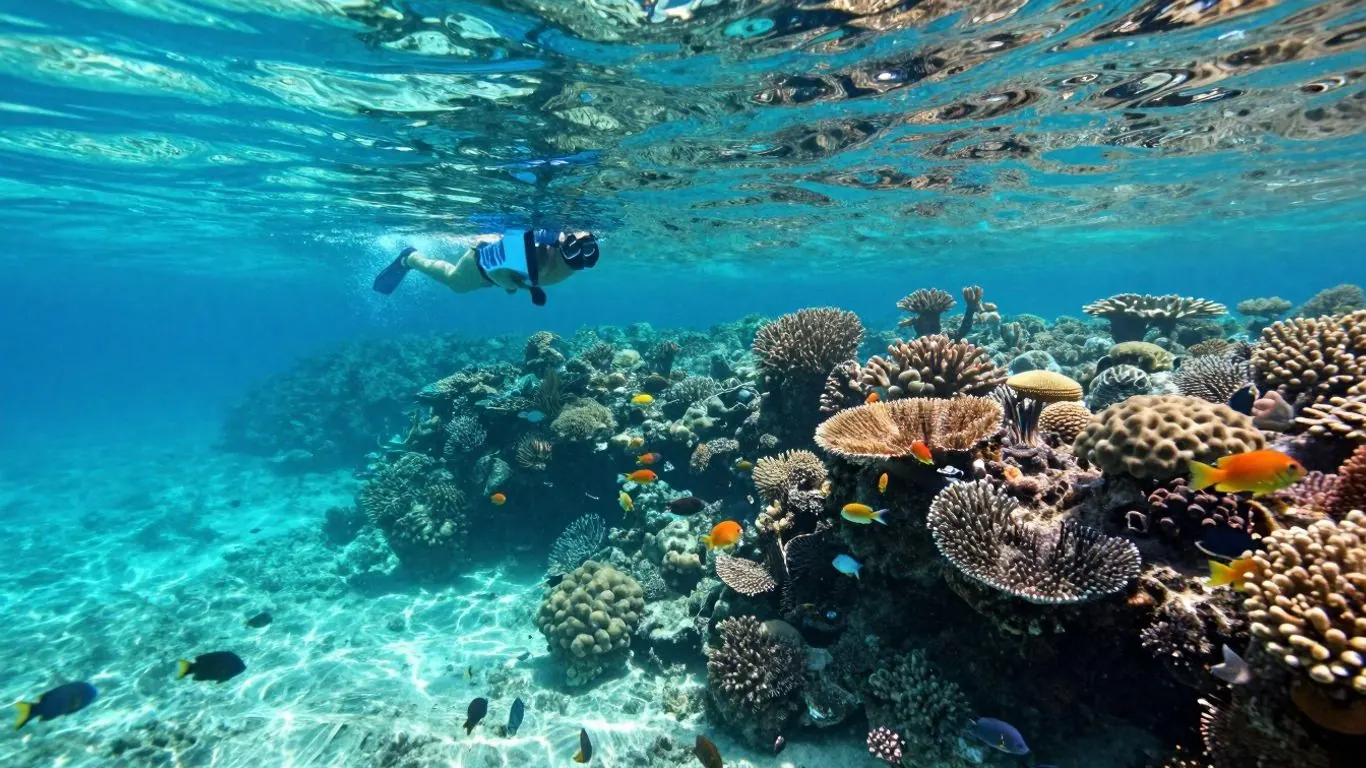
- Open water dives: four dives with your instructor, usually over two days, where you apply those skills on a real reef.
PADI says the whole course can take as little as two to four days, depending on the dive shop's schedule and your progress. Once certified, you can dive with a buddy or a dive professional. The Tokoriki Diving course page notes that the certification allows dives to a maximum of 18 metres (60 feet) and is valid for life.
Before you go: requirements and paperwork
- Age: the minimum age is 10. Divers certified between 10 and 14 receive a Junior Open Water certification, which automatically becomes a full Open Water certification at 15.
- Water skills: during the course you must float or tread water for 10 minutes, and swim 200 metres without aids (or 300 metres with mask, fins and snorkel). There is no time limit.
- Medical: you will complete a diver medical questionnaire. If you answer yes to any question, you need a physician's written approval before any in-water training. PADI links to the form on its course page. Review it at home and see your doctor before you travel if needed, because dive staff cannot give that approval.
- Insurance: make sure your travel medical insurance covers recreational scuba diving.
Three ways to fit the course into a holiday
| Option | What you do at home | What you do in Fiji | Best for |
|---|---|---|---|
| Full course in Fiji | Nothing, or a little reading | Theory, confined water and four open water dives | Long stays at one resort, people who prefer classroom learning |
| eLearning plus Fiji | Theory online | Confined water skills and four open water dives | Most holidaymakers; frees up two to three hours a day |
| Referral | Theory and pool sessions with a local dive shop | Four open water dives only | Short trips; Tokoriki Diving says a referral can be finished in as little as two days |
PADI confirms you can complete all three parts at home, on holiday, or split between the two. A referral makes sense if you live near a dive shop and want your Fiji days spent on reefs rather than in a pool. Ask your home dive shop for the referral paperwork and how long it stays valid.
Resort dive centre or dive shop?
In Fiji, the line between a resort and a dive shop is often blurred. Many island resorts have an in-house or partner dive centre. Others are served by an operator that runs boats to several resorts. What matters is how the course is set up.
- Resort dive centre: lessons start from your beach, and the schedule fits around meals and downtime. As one example, Tokoriki Diving in the Mamanucas is a PADI 5 Star centre with a dedicated saltwater training pool. It teaches the full course on-site, with a printed crew pack and poolside tutorials if you prefer not to study online. It recommends booking your instructor before you arrive.
- Operator serving several resorts: Subsurface Fiji, for example, runs daily guided trips from Musket Cove in the Mamanucas, with PADI instructors teaching beginner courses. These operators often offer more dive sites and departure times, but check pickup logistics from your resort.
- Packaged learn-to-dive stays: some backpacker-friendly packages bundle the course with accommodation. The Yasawa Adventures Fiji Learn to Dive package is five days and four nights at Mantaray Island Resort and leads to an SSI Open Water certification rather than PADI. Both are internationally recognised, but check which agency you want before booking.
Questions worth asking any operator: maximum students per instructor, whether confined water skills are taught in a pool or a sheltered shallow area, what equipment is included, and how weather days are handled. For regions and dive conditions, see our guide to scuba diving in Fiji.
Scheduling around flights and the rest of your trip
The biggest planning mistake is learning to dive at the very end of a trip. Divers Alert Network's flying-after-diving guidance recommends a minimum surface interval of 12 hours after a single no-decompression dive. After multiple dives per day or multiple days of diving, which describes any Open Water course, the minimum is 18 hours. Tokoriki Diving also asks students to allow at least 18 hours. That rule covers domestic flights and helicopter or seaplane transfers too.
- Start the course on day two or three of an island stay, after you have adjusted to the heat and the time zone.
- Leave a spare day in case wind, a cold or trouble equalising your ears postpones a session.
- Plan a dry final day on the island: snorkelling is fine, and so is a spa visit or a village tour.
- Use your new certification: once you're certified, a couple of fun dives before you leave is the best way to build confidence.
Costs and what to budget
Course prices vary by operator, island and season, and are usually quoted in Fiji dollars. When comparing quotes, check what each one includes: eLearning fees (often paid separately to PADI), equipment rental, boat fees, certification processing, and any marine park or reef levies. Packages that include accommodation also often include compulsory resort meal plans. Ask for a written, itemised quote and check current rates before you commit. For package comparisons, our Fiji dive packages guide sets out the main styles.
Planning notes
Complete your medical questionnaire first, then the eLearning, then book the course with your resort or dive operator for the middle of your island stay. Keep at least 18 hours between your last dive and any flight. When you are ready to choose sites, our top Fiji dive sites guide is the next read. Far & Away Adventures can match you with a resort whose dive centre suits beginners and build the course into your itinerary.
Frequently asked questions
Can I try diving before committing to the full course?
Yes. Most Fiji dive centres offer a supervised try-dive for beginners, and some of that experience may count toward the Open Water course if you continue with the same operator.
Is Fiji a good place to learn?
Warm water, sheltered lagoon sites and plentiful reef life make it a comfortable place for first dives, especially in the calmer Mamanuca lagoons.
Does a PADI card work at non-PADI dive shops?
Generally yes. Dive operators worldwide accept the major training agencies, though they may ask to see your logbook if you have not dived recently.