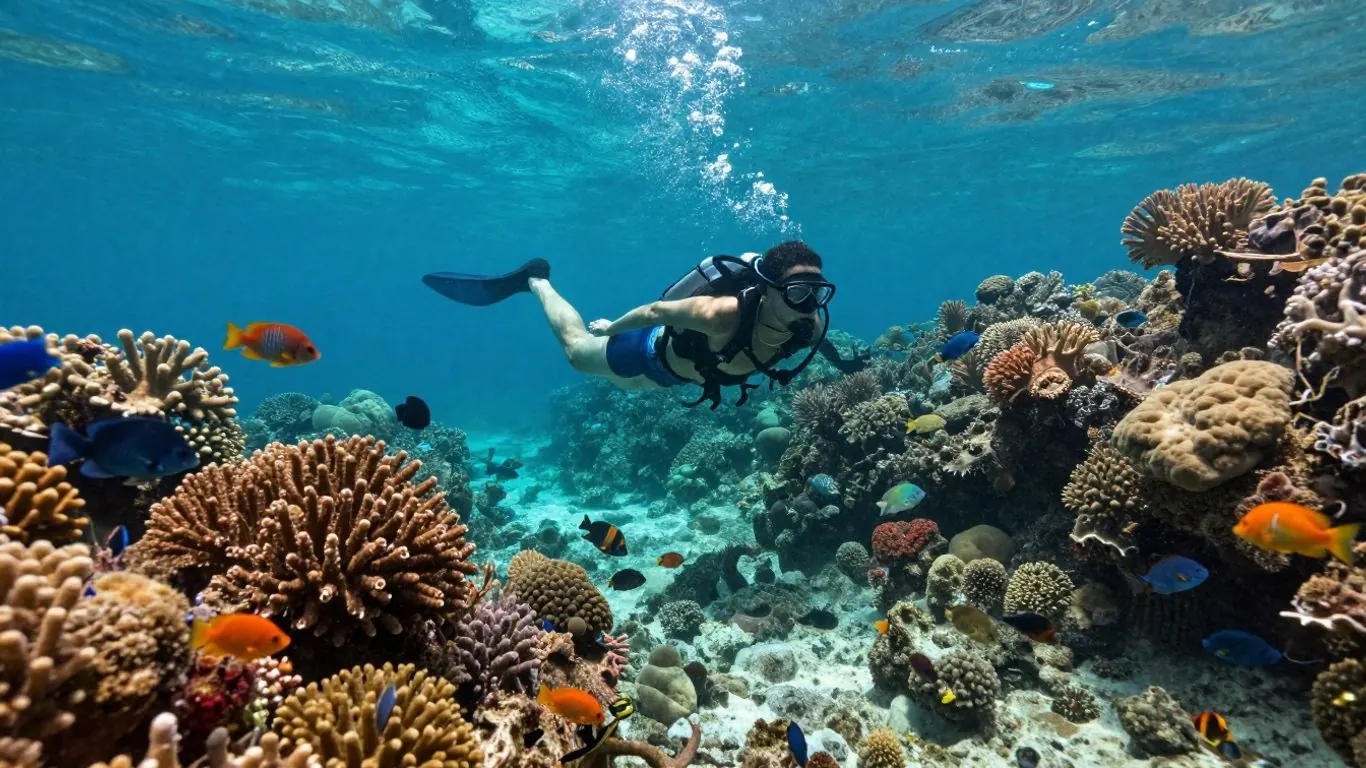
Diving in Fiji can mean coral gardens near a resort, drift diving through a channel, walls and pinnacles offshore, or a remote itinerary built around several days on the water. The right plan depends less on finding one universally “best” site and more on matching the region, operator, conditions and daily pace to each diver’s certification, recent experience and comfort.
Fiji also works well for groups whose interests differ. One traveller may want a dive-focused stay while another prefers snorkeling, beaches, hiking, village visits or quiet resort time. Choosing the right base can give divers worthwhile access without making every day revolve around the dive boat. That balance is especially useful for couples, families and multi-generational groups.
Why Fiji suits different kinds of dive trips
Fiji’s dive regions are spread across main islands, smaller islands and offshore reefs. That geographic range creates meaningful choices in accommodation, access and underwater setting. Some travellers value the convenience of diving from a mainland resort; others accept longer transfers for a quieter island and a trip centered on the sea. A first-time visitor does not need to cover every famous region in one holiday.
Reef form, depth, current, entry method and surface conditions can vary even within one region. A site described broadly as suitable for beginners may not suit every diver on every day. Qualified operators make decisions using current conditions and the diver in front of them. Share certification level, number of logged dives, date of the most recent dive, equipment needs and any concerns before arrival.

Coral, channels, walls and current
Fiji is known for colorful reef environments, including soft corals, hard-coral areas, pinnacles, passages and walls. The experience changes with tide, current, light and weather. Current can bring movement and marine activity, but it can also make a dive more demanding. Drift dives and exposed sites should be selected for the actual diver’s skills rather than treated as items that everyone must check off.
Wildlife, water clarity and access are never guaranteed. A responsible operator may move to another site, adjust the schedule or cancel when conditions require it. Build the trip around the quality of the overall region, not a promise of one animal or one photograph. That approach protects both safety and enjoyment when the ocean does something different from the brochure.

Kadavu and the Great Astrolabe Reef
Kadavu is a strong choice for travellers who want a more remote, nature-led stay. Tourism Fiji highlights the Great Astrolabe Reef as a central reason visitors come for diving and snorkeling, while the island also offers hiking and time in a less urban setting. The appeal is not convenience: flights, boat transfers and weather can shape arrival and departure days, so the itinerary needs breathing room.
Ask a Kadavu property how its diving is organized, which transfer is included, what happens after a delayed arrival and whether non-divers have independent options. Some stays suit guests who want several dive days; others fit a broader island holiday. Compare the complete package—room, meals, tanks, equipment, boat arrangements and transfer—not only the nightly room rate.
Pacific Harbour, Beqa Lagoon and Viti Levu
Pacific Harbour on Viti Levu can combine diving with easier road access and activities for non-divers. Tourism Fiji describes Beqa Lagoon diving that includes coral sites and wrecks, as well as specialized shark dives intended for experienced divers. Those experiences require direct discussion with a qualified operator; participation, site choice and the day’s plan depend on certification, experience, conditions and operator rules.
A Viti Levu base can be practical when a party wants diving without multiple domestic flights, or when diving is one part of a larger Fiji trip. Road transfer times still matter. Avoid placing a fixed dive departure immediately after an international arrival, and do not assume a same-day cross-island transfer leaves useful time. Rest after the flight and protect the first booked activity from a late arrival.
Vanua Levu and Savusavu
Vanua Levu gives divers access to northern Fiji while supporting a relaxed land-based holiday. Tourism Fiji identifies Savusavu as a base for several dive areas, including access associated with Namena, the Great Sea Reef and Natewa Bay. Exact sites and travel time depend on the operator, sea state and location of the accommodation, so confirm what “local diving” means for the stay being considered.
This region can suit couples or groups that want diving, resort time and northern-island scenery in one base. Ask whether trips are shore-based or boat-based, how many dives make up the usual outing, and whether minimum numbers apply. Non-divers should evaluate the property on its own merits rather than assuming that every dive resort offers a full program of alternative activities.
Taveuni and the Somosomo Strait
Taveuni is closely associated with diving in the Somosomo Strait and around Rainbow Reef. Tourism Fiji notes that current, tide and depth influence these dives and that some experiences are better suited to experienced divers. That makes operator matching particularly important. Ask which sites fit the least experienced diver, how the operator groups guests and what alternatives are used when current is unsuitable.
Taveuni also appeals to travellers interested in waterfalls, forests and hiking, which can make it a rewarding mixed-interest base. Do not overfill the schedule: strenuous land activities and repeated dive days both require energy. A flexible itinerary can alternate diving with a lighter day and leave space for weather-related changes.
Mamanuca and Yasawa island stays
The Mamanuca and Yasawa groups can work when diving is part of a beach-focused island holiday rather than the only purpose of the trip. The key question is what the chosen resort’s dive operation can actually reach. Two properties in the same island group may offer different boat times, site choices, schedules and experience requirements.
Before selecting a resort, ask how often diving is offered, whether departures require minimum participation, where equipment is stored and whether certification or refresher options are available. Confirm transfer timing before committing to a dive on arrival or departure day. A beautiful remote resort is not automatically the best base for a guest who expects intensive daily diving.
Planning for beginners and returning divers
New divers should choose the operator first and the famous site second. Ask about instructor ratios, training location, entry method, typical conditions and how plans change when a guest is uncomfortable. A resort pool or sheltered training area may help with early skills, but only the operator can say which certification course or introductory experience is appropriate.
Certified divers returning after a long break should disclose that gap. The operator may recommend a refresher, skills review or easier first dive. This is not lost holiday time; it can make later dives more relaxed. Travellers should also discuss rental-equipment sizes, prescription masks, computers, exposure protection and any personal equipment they intend to bring.
Health, insurance and flying after diving
Diving involves health considerations that a travel page cannot assess. Divers should follow their training, the operator’s procedures and appropriate medical advice, disclose relevant health changes, and carry insurance suited to the planned activities and destination. Confirm what emergency support and oxygen equipment the operator has and understand that remote-island response may differ from a mainland setting.
Leave an appropriate surface interval before flying or travelling to altitude. Divers Alert Network guidance varies with whether a dive was single, repetitive, multi-day or decompression diving, so a rigid one-size-fits-all rule is not appropriate here. Review current DAN guidance, follow the dive operator’s direction and design the last day so no one feels pressured to choose between a dive and a flight.
Build a dive itinerary with breathing room
Start with the number of dive days rather than a list of regions. A short trip may be better with one well-matched base. A longer holiday can pair a dive-focused region with a beach or cultural stay, but every move consumes time. Domestic flights, boat transfers, road journeys, check-in times and weather buffers all reduce the hours available underwater.
Protect the arrival day, keep a weather-flexible day around a priority excursion and reserve the final preflight interval. Confirm inclusions in writing: tanks, weights, equipment, nitrox if requested, taxes, boat fees, meals and transfers. Exact availability and terms must come from the operator for the travel dates. A clear itinerary should make the diving safer and the whole holiday more enjoyable, not simply fit the maximum possible number of dives.
Explore Kadavu travel planning
Compare Pacific Harbour and Beqa Lagoon
Frequently asked questions
Is Fiji suitable for beginner divers?
Yes, some operators offer training and sites that may suit beginners, but conditions differ by region, site and day. Choose a qualified operator, share experience honestly and ask how instruction, group size and site selection are handled.
Which Fiji region is best for diving?
There is no single best region for every traveller. Kadavu suits remote reef-focused stays; Pacific Harbour offers Viti Levu access; Vanua Levu and Taveuni support northern-island diving; and the Mamanucas or Yasawas can combine diving with a beach holiday.
Can non-divers enjoy a Fiji dive trip?
Often, yes. Select a base with worthwhile snorkeling, beaches, nature or cultural activities, and check what is genuinely available to non-divers. Do not assume every dive-focused property has an extensive alternative program.
How many dive days should a Fiji itinerary include?
Choose the number from the trip length, diver interests and required transfer and preflight intervals. One well-matched base is often better than rushing between several regions. Leave room for rest and weather changes.
How long should I wait before flying after diving?
The appropriate interval depends on the dive profile, including whether diving was single, repetitive, multi-day or involved decompression. Follow current Divers Alert Network guidance, the operator’s instructions and appropriate medical advice.
Are marine-life sightings and visibility guaranteed?
No. Wildlife, visibility, current, weather and site access vary. Choose a region for the quality and range of the overall experience, and expect the operator to adjust the plan when conditions require it.