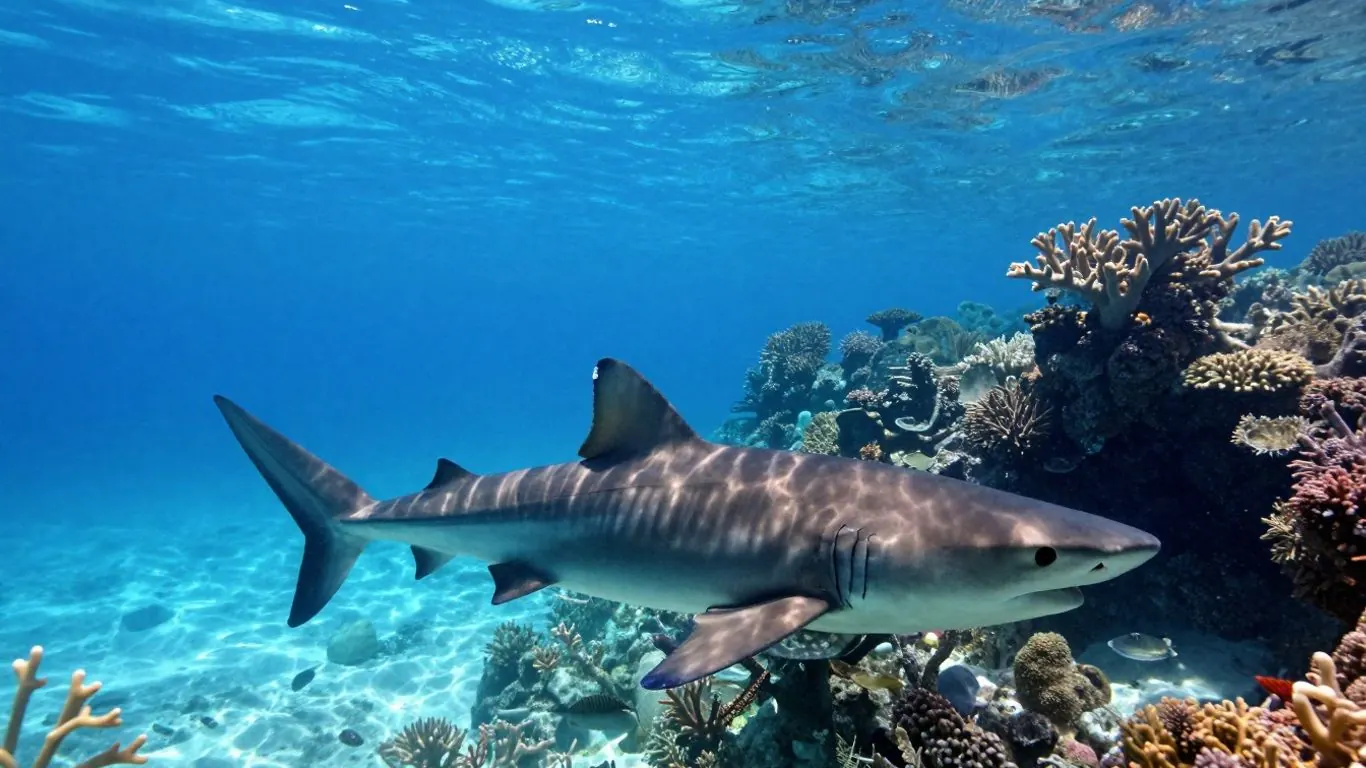

Thinking about swimming with sharks in Fiji? It’s a pretty wild idea, and honestly, it’s become a huge thing there. But it’s not just about the thrill; there’s a whole lot more going on behind the scenes with these Fiji shark encounters, especially when it comes to keeping things safe and looking out for the ocean.
Key Takeaways
Fiji has become a leader in ethical shark tourism, setting a standard for how to interact with sharks responsibly.
These experiences support local communities through revenue sharing and create jobs, especially for young people.
The tourism helps fund important marine conservation efforts, including protected areas for sharks.
Safety is a top priority, with professional dive operations and strict protocols in place for all Fiji shark encounters.
While exciting, these encounters raise questions about the ethics of feeding sharks and the impact on their natural behavior.
Pioneering Ethical Fiji Shark Encounters
Fiji has become a global leader in how we interact with sharks in their natural environment. It’s not just about seeing these amazing creatures; it’s about doing it in a way that respects them and helps protect their future. This approach has set a new standard for ecotourism worldwide.
A Model for Sustainable Ecotourism
What makes Fiji’s shark encounters stand out is the commitment to a sustainable model. It’s about more than just a thrill; it’s a carefully managed experience that benefits everyone involved. This isn’t just tourism; it’s a conservation project that happens to take people out on boats. The goal is to show people the beauty of sharks while ensuring their populations thrive.
Here’s a look at how this model works:
Respectful Observation: Encounters are designed to minimize disturbance to the sharks. The focus is on observing their natural behaviors.
Community Involvement: Local Fijian communities are partners, not just bystanders. Their involvement is key to the long-term success of these projects.
Economic Benefits: The revenue generated directly supports conservation efforts and provides livelihoods for local people, creating a strong incentive for protection.
The success of Fiji’s model shows that tourism can be a powerful force for good when done right. It proves that we can enjoy nature’s wonders while actively contributing to their preservation.
Community Engagement and Revenue Sharing
One of the most important parts of Fiji’s ethical shark experiences is how they involve and benefit local communities. It’s a partnership that recognizes the traditional custodians of these waters. By sharing the revenue generated from these encounters, local villages gain a direct stake in protecting their marine resources. This collaboration has led to a remarkable recovery of fish stocks in protected areas, benefiting fishermen and the entire ecosystem. It’s a win-win situation that fosters a deep sense of stewardship.
Global Recognition and Industry Impact
Fiji’s pioneering work in ethical shark tourism has earned international acclaim. The model developed here is now being looked at and adapted by other destinations around the world. It demonstrates that responsible shark encounters can be a highly successful niche product, contributing significantly to local economies without harming the environment. This has helped to shift perceptions about sharks, turning them from feared predators into valuable assets for conservation and tourism. You can find incredible experiences across the Pacific , with Fiji leading the way in shark encounters.
Key achievements include:
Establishment of the Shark Reef Marine Reserve, Fiji’s first legislated Marine Protected Area.
Creation of the Fiji Shark Lab, a non-profit focused on research and conservation.
Development of programs that train and employ local youth as dive professionals.
Receiving awards for excellence in tourism sustainability.
Understanding Fiji’s Shark Species
Fiji’s vibrant coral reefs and deep blue waters are home to a remarkable array of shark species. Encountering these magnificent creatures in their natural habitat is a highlight for many visitors, offering a glimpse into a vital part of the marine ecosystem. It’s important to know who you might meet and what makes each species unique.
Encountering Reef Sharks
Smaller reef sharks are often the first sharks people see when exploring Fiji’s underwater world. These sharks are generally shy and play a crucial role in keeping the reef healthy by preying on smaller fish and crustaceans. You’ll often spot them patrolling the shallows or resting near the coral.
Blacktip Reef Sharks: Easily identified by the distinct black markings on their fins, these sharks are common in shallower reef areas. They are quite active and can be seen cruising around.
Grey Reef Sharks: Known for their slender bodies and inquisitive nature, grey reef sharks are frequently seen around drop-offs and reef edges.
Whitetip Reef Sharks: Often found resting on the seafloor or in caves during the day, these sharks become more active hunters at night.
The Majestic Tiger Shark
Tiger sharks are among the ocean’s largest predatory sharks and are a truly awe-inspiring sight. They are named for the faint stripes on their bodies, which are more prominent in younger sharks. While they are apex predators, encounters are typically managed with great care and respect.
Tiger sharks are known for their broad diet and can be found in various marine environments, from shallow coastal waters to deep offshore areas. Their presence indicates a healthy and robust marine food web.
Seeing a tiger shark is often a matter of luck, as they are not always present at every feeding or viewing site. Their appearance is a special event, reminding us of the raw power and beauty of the ocean’s top predators. For those interested in the diverse marine life, exploring Kadavu’s top beaches can also offer unique wildlife viewing opportunities.
The Power of Bull Sharks
Bull sharks are perhaps the most well-known shark species encountered in Fiji, particularly in areas like Pacific Harbor. They are famous for their stocky build and their ability to thrive in both saltwater and freshwater environments, which allows them to venture into rivers and estuaries.
Behavior: Bull sharks are known for their direct approach and can be quite curious. They are a significant part of the shark feeding experiences offered in Fiji.
Conservation Status: While not currently endangered, bull shark populations face threats from habitat loss and overfishing, making responsible tourism vital for their protection.
Identification: They have a blunt snout and a more robust body shape compared to many other shark species.
The presence of these different shark species highlights the rich biodiversity of Fiji’s marine ecosystems. Understanding these animals is the first step towards appreciating the importance of their conservation and the role that responsible ecotourism plays in their future. Many operators are dedicated to the research and conservation of sharks and rays in Fiji, contributing to a better future for these animals.
The Ethics of Shark Diving in Fiji
It’s a question many people ponder, and honestly, there isn’t a simple yes or no answer. It’s a bit of a mixed bag, really. On one hand, these experiences can be incredibly powerful, changing how people view these often-misunderstood creatures. On the other, there are valid concerns about how these interactions affect the sharks themselves.
Arguments Against Feeding Practices

One of the main points of discussion revolves around feeding the sharks. To get the large numbers of sharks, especially the more elusive ones like bull sharks, that you see in photos and videos, operators often use bait. This means the sharks are coming to a specific spot, not because they’re naturally congregating there, but because they expect food. This practice has led to some sharks becoming quite dependent on these human-provided meals. Some operators might even hand-feed them, which really blurs the line between a wild encounter and a zoo-like experience. It makes you question if these sharks would even know how to hunt effectively if the feeding stopped. It’s a bit like how some animals in national parks can become too accustomed to people, which can sometimes lead to trouble down the line.
The reliance on artificial feeding raises questions about the sharks’ natural behaviors and their ability to survive independently. It’s a delicate balance between attracting them for tourism and preserving their wild nature.
The Conservation Imperative
Despite the concerns about feeding, there’s a strong conservation argument for shark diving in Fiji. A significant portion of the revenue generated from these tours goes directly into protecting the marine environment. For example, areas around places like Beqa Lagoon are often designated as marine protected areas, with fishing strictly prohibited. This helps create safe havens where sharks can thrive. Considering that millions of sharks are killed each year globally, often through destructive fishing practices like finning, these conservation efforts, even if they seem small, are incredibly important. They provide an alternative livelihood for local communities, reducing their reliance on fishing and offering a tangible benefit to shark populations. It’s a way to show that sharks have economic value alive, not just dead.
Balancing Tourism and Wildness
So, how do you strike a balance? The best operators in Fiji are very aware of these ethical considerations. They also educate visitors about shark behavior and responsible interaction. The goal is to create an experience that is both awe-inspiring and respectful of the animals’ natural state as much as possible. While the feeding aspect is a point of debate, the overall impact can be positive if the tourism revenue directly supports conservation and community well-being. It’s about making sure that the money spent on these trips contributes to the long-term survival of sharks and their habitats. Planning your trip with a reputable operator is key to having a responsible and memorable encounter. You can find more information on planning your visit to places like Tuvalu to understand the logistics of remote island travel, which often involves similar considerations for sustainable tourism.
Ensuring Safety During Fiji Shark Encounters
It’s a valid concern, and it’s good to know that the operations here take it very seriously. These aren’t just casual boat trips; they are carefully managed experiences designed to keep both you and the sharks protected. The professional dive operators in Fiji have decades of experience running these encounters, and they’ve developed robust protocols to ensure a secure environment for everyone involved.
Professional Dive Operations
The companies offering these shark experiences are not fly-by-night outfits. They are established dive centers with highly trained staff who know these waters and the sharks intimately. Many have been doing this for years, multiple times a week, refining their techniques and safety measures. They understand the behavior of different shark species and how to manage interactions effectively. Choosing a reputable operator is the first step towards a safe and memorable adventure. You can find some great options when comparing diving in Fiji and Vanuatu .
Strict Safety Protocols
Before you even get in the water, you’ll receive a thorough briefing. This isn’t just a formality; it covers everything you need to know about how to behave during the encounter. You’ll be instructed on how to position yourself, how to move (or not move), and what to do if a shark gets a little too curious. These rules are in place for a reason, helping to minimize any potential risks and maintain the sharks’ natural behavior as much as possible.
Listen carefully to all instructions from the divemasters and handlers.
Remain still when directed, especially during feeding.
Avoid sudden movements or extending limbs unnecessarily.
Keep your camera steady and avoid jerky motions.
The Role of Divemasters and Handlers
Your safety is further looked after by experienced divemasters and dedicated shark handlers. These individuals are in the water with you, constantly monitoring the sharks’ activity. They are trained to manage the sharks’ behavior, often using specialized tools to gently guide any overly inquisitive individuals away from the group. There’s typically a good ratio of staff to divers, meaning there’s always an eye on you and the surrounding marine life. It’s a well-coordinated effort to create an environment where you can observe these incredible creatures with peace of mind.
The focus is always on maintaining a respectful distance and allowing the sharks to behave as naturally as possible, while ensuring human participants are secure. This balance is key to the ethical nature of these encounters.
These operations are designed to be safe, even for those who might be a bit apprehensive. The sharks, like the blacktip and whitetip reef sharks often seen, are generally accustomed to the presence of divers and are not typically aggressive when approached correctly. The goal is observation, not interaction that could be harmful to either party.
A Day on the Water
Getting ready for a shark encounter in Fiji is an adventure that starts long before you hit the water. Most trips kick off early, around 8:00 AM, with a gathering at the dive shop. Here, you’ll get your gear sorted and meet fellow adventurers. The anticipation builds with every wave, a palpable excitement shared among everyone on board.
Exploring Different Depths
The main event often involves multiple stops, each offering a unique perspective. The first, and arguably most dramatic, is typically around 30 meters. This is where the main attraction happens, with bait stations set up to draw in a variety of sharks. You might see dozens of bull sharks, along with nurse and lemon sharks, all gracefully moving around the feeding area. It’s a mesmerizing display of nature’s power. Here, the focus shifts to reef sharks, like blacktips and whitetips, often seen in large numbers, with the occasional bull shark still present. The final stop, a safety requirement at 5 meters, often takes place near a coral wall, where sharks of all kinds can be seen swimming by. This part of the dive is surprisingly calm, allowing for reflection on the incredible sights.
Unforgettable Underwater Moments
Most of the dive involves staying put, observing the sharks as they come and go. You’re not really swimming around much, just absorbing the scene. The sheer number of sharks can be overwhelming, a true spectacle that stays with you. Some operations even offer a second dive nearby, usually at a shallower depth of 20 meters, providing another chance to witness the incredible shark activity. It’s a chance to see more bull and reef sharks, reinforcing the amazing experience. This isn’t just a dive; it’s a profound connection with marine life that reshapes your perspective.
The experience is often described as surreal, a moment where the usual rules of the ocean seem to bend. It’s a chance to witness these often-misunderstood creatures in their element, a powerful reminder of the wild beauty that still exists.
Here’s a general idea of what a day might look like:
8:00 AM: Arrive at the dive shop, gear up, and meet the group.
9:30 AM: First dive begins, often with multiple depth stops.
): Surface interval and discussion.
): Second dive (if offered).
): Return to shore.
This kind of trip offers a unique way to connect with Fiji’s natural wonders, much like experiencing an authentic Fijian village homestay . It’s a journey that goes beyond typical tourism, offering a glimpse into a world few get to see.
Conservation Efforts Driven by Fiji Shark Tourism

It’s pretty amazing how a trip to see sharks can actually help protect them and their homes. The tourism happening around shark encounters in Fiji isn’t just about a cool experience; it’s become a real engine for conservation. Think of it as a way to show people how important these animals are, and then use the money and attention generated to do some good.
Establishing Marine Protected Areas
One of the biggest wins from this kind of tourism is the creation of special ocean zones. These areas are like parks for marine life, where fishing is stopped or limited. This gives the underwater world, including sharks and their food sources, a chance to recover and thrive. It’s a direct way to give these ecosystems a break from human pressure. Fiji has been a leader in this, setting up places like the Shark Reef Marine Reserve. This initiative, partly managed by tourism operators, shows how businesses can work with the government to protect large areas of the ocean. It’s a model that’s been recognized globally for its success in safeguarding marine biodiversity.
Supporting Local Communities
This whole shark tourism thing also makes sure that the people living in Fiji benefit directly. Instead of relying on fishing that might harm shark populations, local villages get a share of the tourism revenue. This provides them with a steady income and an incentive to protect the marine environment they depend on. It’s a win-win: communities get economic support, and sharks get a safer habitat. This approach helps build a strong connection between conservation goals and the livelihoods of the people who live closest to these important marine areas. It’s about making sure that the benefits of protecting sharks are shared.
Research and Education Initiatives
Beyond protected areas and community support, shark tourism in Fiji is a platform for learning and discovery. Many dive operators work with researchers, helping to gather data on shark populations, their behavior, and their health. This information is super important for understanding how to best protect them. Plus, the encounters themselves educate visitors. There are even programs where you can adopt’ a shark, with the funds going directly towards research and conservation projects. It’s a way to get people involved, even after they’ve left Fiji.
The success of shark tourism in Fiji highlights a powerful synergy between economic activity and environmental stewardship. By creating a vested interest in the health of marine ecosystems, this industry provides a sustainable funding stream for conservation actions and fosters a deeper appreciation for these often-misunderstood creatures.
Here’s a look at some key conservation achievements linked to Fiji’s shark tourism:
Establishment of the Shark Reef Marine Reserve: A legislated Marine Protected Area (MPA) managed through a public-private partnership.
Revenue Sharing with Local Villages: Direct financial contributions to communities, reducing reliance on potentially harmful fishing practices.
Support for Shark Research: Funding for initiatives like the Fiji Shark Lab, dedicated to studying and protecting sharks and rays.
Development of Shark Regulations: Providing expertise and draft work for national policies aimed at shark protection.
Mangrove Restoration Projects: Efforts to rebuild vital coastal habitats that support marine life.
These efforts demonstrate that with careful planning and a commitment to ethical practices, tourism can be a force for good in protecting our planet’s oceans and the incredible creatures that inhabit them. It’s a testament to what can be achieved when conservation and economic development go hand-in-hand, creating a positive ripple effect for both people and marine life. You can find out more about these conservation efforts by looking into Fiji’s Marine Protected Areas .
Planning Your Fiji Shark Encounter
So, you’re thinking about diving with sharks in Fiji? Awesome! It’s a pretty incredible experience, but like any adventure, a little planning goes a long way. Let’s break down what you need to know to make your trip smooth and unforgettable.
Choosing a Dive Operator
When it comes to shark encounters in Fiji, especially in places like Beqa Lagoon, there are a few reputable dive shops to choose from. All of them operate out of Pacific Harbor and generally maintain similar standards and pricing. The main operators you’ll find are Beqa Adventure Divers, Aqua Trek Divers, and Coral Coast Divers. While I went with Beqa Adventure Divers, many people report that the other shops also do a fantastic job and follow strict safety guidelines. It’s worth noting that these operators often coordinate to avoid overcrowding the dive sites, ensuring a better experience for everyone. Researching and selecting an operator that aligns with your values for ethical tourism is key.
Understanding Dive Requirements
Before you jump in, there are a few prerequisites. This ensures you’re comfortable with deeper dives and underwater procedures. Also, a couple of practical tips: avoid wearing white gear, as it can be mistaken for bait by the sharks. A full wetsuit is a must, and remember to charge your cameras – you won’t want to miss capturing these moments! It’s also important to pay attention during the pre-dive briefing; the safety instructions are there for a reason.
Best Times for Your Visit
Good news! You can experience shark diving in Fiji year-round. The sharks in areas like Beqa Lagoon are residents and are present no matter the season. While the dives are generally reliable, extreme stormy conditions can lead to cancellations, so it’s always wise to have a little flexibility in your Fiji travel itinerary .
Remember, these encounters are a privilege. Approaching them with respect for the marine environment and the creatures within it is paramount.
Looking Ahead: The Future of Ethical Shark Encounters
As we wrap up our look at ethical shark experiences in Fiji, it’s clear that this is more than just a tourist activity. It’s a carefully managed program that supports local communities and helps protect these amazing creatures. The work being done here shows that we can connect with nature in a way that benefits everyone involved, from the sharks themselves to the people who call these waters home. By choosing these kinds of responsible encounters, visitors contribute to a sustainable future for Fiji’s marine life, ensuring these underwater wonders can be appreciated for generations to come. It’s a powerful reminder that our adventures can make a real difference.
Is it safe to dive with sharks in Fiji?
Yes, shark diving in Fiji is generally considered safe when done with reputable dive operators. These companies have years of experience, follow strict safety rules, and have trained staff who know how to handle the sharks and ensure divers’ well-being.
What kind of sharks will I see in Fiji?
You’re most likely to see reef sharks, like the blacktip reef shark, which are common in the shallow waters around coral reefs. Bigger sharks like bull sharks are also frequently seen. While less common, there’s a chance you might spot a majestic tiger shark, though seeing one is usually a matter of luck.
Do the dive operators feed the sharks?
Yes, most shark diving operations in Fiji use feeding to attract sharks, especially the larger ones like bull sharks, which are solitary hunters. This feeding helps bring many sharks together for the dive experience. However, this practice is a point of discussion regarding its impact on the sharks’ natural behavior.
How much does a shark dive in Fiji cost?
Shark diving in Fiji is a special experience, so it’s not the cheapest activity. Some operators might offer a small discount if you bring your own gear.
Is shark diving in Fiji good for conservation?
Many dive operators in Fiji see shark diving as a way to help conservation. The money from these dives often goes towards creating protected marine areas, supporting local communities so they don’t have to rely on fishing, and funding research to protect sharks. It’s seen as a way to show people sharks are important and worth saving.
What are the requirements for a Fiji shark dive?
You’ll also need to wear a full wetsuit, and avoid wearing white gear, as sharks might mistake it for food. Always listen carefully to the dive briefing for specific rules and safety instructions.
Confirm current details
Ask the operator how the dive is run, including whether sharks are fed, where divers are positioned and how fees support local communities and marine reserves.