Savusavu is a small harbour town on the south coast of Vanua Levu, Fiji's second-largest island, and the local tourism association markets it as the "Hidden Paradise". Most visitors fly in from Nadi in under an hour, then spend their days between the steaming Nakama hot springs, the Copra Shed Marina, the town market and day trips to waterfalls, pearl farms, cocoa farms and Natewa Bay. Plan on at least three or four nights. The town itself takes an afternoon, but the region rewards slower days.
Getting to Savusavu
According to the Savusavu Tourism Association, Fiji Link (the domestic arm of Fiji Airways) runs two flights a day from Nadi International Airport to Savusavu, with extra services in busy periods. The flight takes about 55 minutes, and there are also daily flights from Suva.
The alternative is to fly into Labasa on the north coast (about 45 minutes from Nadi) and drive roughly 90 minutes over the central mountains. Flights to Labasa are often cheaper, and the road is scenic: cane fields and mangroves first, then montane forest and waterfalls, then the long view down to Savusavu Bay. Ferry services also call at Savusavu; timetables change, so check them close to travel.
| Route | Time | Best for |
|---|---|---|
| Nadi to Savusavu, direct flight | About 55 minutes | Short stays, easiest connection from international flights |
| Nadi to Labasa, then road | About 45 minutes plus a 90-minute drive | Lower fares, travellers who enjoy a scenic drive |
| Suva to Savusavu or Labasa | Daily flights | Combining Vanua Levu with Suva or the Coral Coast |
Small domestic aircraft have tight baggage limits, so pack light. Our guide to Fiji's inter-island flights covers how to time a domestic hop after a long-haul arrival.
Getting around town and beyond
Savusavu's main street runs along the waterfront, and you can walk from one end of town to the other. For anything further, the tourism association's getting-around page lists the options:
- Taxis: metered and relatively cheap. Find them near the bus stand and market, flag one on the street, or ask your resort to call one. For a half-day of sightseeing, agree a price with the driver before you set off.
- Buses: the cheapest way to see the countryside. They leave from the main bus stand and are slow and bumpy, but they do give you a good look at the island.
- Resort shuttles: many places to stay outside town run a shuttle; check the schedule when you book.
- Rental cars: several companies have offices in Savusavu or deliver from Labasa. A car is the easiest way to explore the Hibiscus Highway east of town at your own pace.
Nakama hot springs: look, don't soak
Savusavu's most unusual sight is right in the middle of town. At the Nakama hot springs, water comes out of the ground at close to boiling point, about 100°C. For generations, local families have used the springs as a natural cooking pot for dalo (taro), breadfruit and other foods. The area has been developed into a small geothermal park, with a landscaped, shaded rest area and signs explaining the geology.
This is not a bathing spot. Stay on the paths, hold small children's hands, and keep back from the steaming pools. If you want a warm soak or a mud bath, the geothermal pools near Nadi are the better choice. Our guide to Fiji's hot springs compares them.
The Copra Shed Marina and the waterfront
The Copra Shed was once exactly that: a warehouse where dried coconut (copra) was stored before shipping. It has been rebuilt as the centre of town life. Inside you will find a café with views over the bay, a handicraft shop, currency exchange, airline booking offices and services for visiting yachts. The marina has stern-to berths and moorings, which is why Savusavu Bay is a regular stop for cruising sailors heading toward the Lau Group and the Koro Sea.
Two other marinas sit nearby: Nawi Island Marina, directly across from town, and the Savusavu Marina at the end of Nakama Creek.
The market, pearls and local crafts
For fresh fruit and vegetables, head to the market in the centre of town. The tourism association notes it opens every day except Sunday. Saturday is the day to go, when people come in from the villages and the stalls are full. Go early, carry small notes, and ask sellers how they cook the things you don't recognise. Our guide to Fiji's local markets has more tips on market etiquette.
What to look for in town:
- Black pearls: pearls farmed in Savusavu Bay are the town's best-known export. The J. Hunter Pearls showroom is on the main street, and pearl farm tours let you snorkel over the oyster lines and see how the pearls are raised.
- Kuta weaving: mats, table mats and bags woven from kuta, a reed grown on Vanua Levu. It weaves finer than pandanus and has a soft sheen.
- Sulus and bula prints: sold by the metre or ready-made in the main-street shops, and local tailors can make clothes if you are in town for a while.
Don't buy giant clam shells, coral, turtle shell or trochus shell. These species are protected, and you cannot take them out of Fiji without a permit.
Day trips from Savusavu
Savusavu works best as a base. These are the outings we suggest most often:
- Vuadomo waterfall: about a 20-minute drive west of town, then a 10-minute walk to a cascade with a wide swimming pool. Your taxi driver can help you buy a small bundle of waqa (kava root), the customary gift to present to the village. The tourism association lists an entry fee per person; confirm the current amount on the day.
- KokoMana cocoa farm and chocolate factory: tree-to-bar tours in a forested valley behind Daku Resort, with a strong focus on agroforestry. A good half-day for families.
- Flora Tropica Gardens: about five kilometres from town, with hundreds of palms and tropical plants, many rare, reached by raised timber walkways with views over the bay.
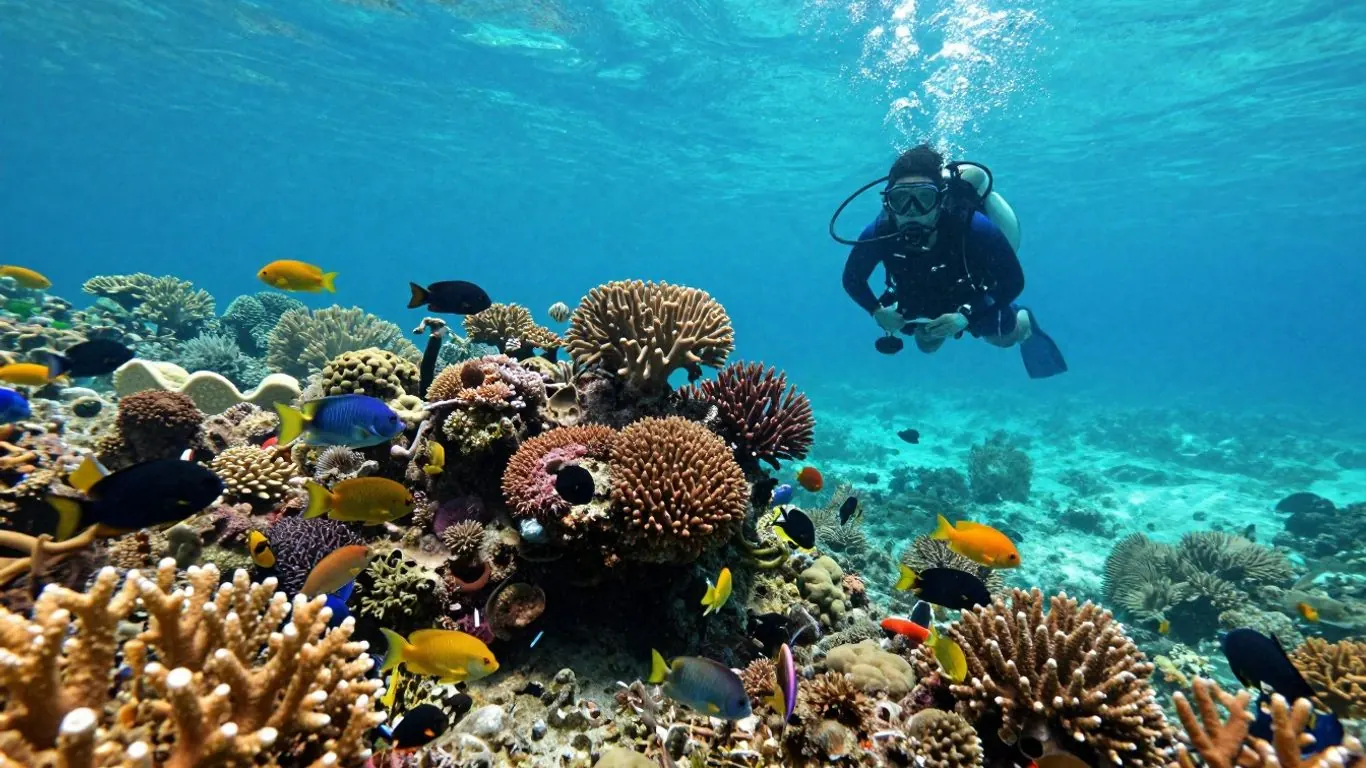
- Natewa Bay: spinner and bottlenose dolphins are common, and Ocean Ventures Fiji runs diving and snorkelling trips there, about 40 minutes from Savusavu.
- Birding on the Natewa Peninsula: the Natewa silktail is found only here and on parts of Taveuni, and the orange dove is a regular sighting.
- River tubing and paddling: local operators run tubing trips on the Sekawa River and paddleboard outings through the mangroves.
- An easy walk: the mostly flat six-kilometre road from town out to the Jean-Michel Cousteau resort, with a taxi back.
The Waisali Rainforest Reserve lies in the hills toward Labasa. Ask locally about trail conditions before you plan a day around it. For guided hikes, use a local operator or arrange a village guide. Most land here is owned by family clans, so going with a guide is the respectful way to walk it.
When to go
Savusavu sits on Fiji's wetter, greener side, but the pattern is the same as the rest of the country. The wet season normally runs from November to April, with short, heavy showers, and March is usually the wettest month. July is almost always the driest. The trade wind blows from the east-southeast most of the year. It usually drops in the evening and picks up again by mid-morning, so plan boat trips and snorkelling for early in the day. Cyclones are possible from November to April, so build a spare day into any itinerary that relies on a domestic flight.
Planning notes
Book your Fiji Link seats when you book your international flights, and try to arrive in Nadi in time for a same-day connection, or plan a night near the airport. Allow three nights for the town and a couple of day trips, and five or more if you want to dive Natewa Bay or add Taveuni. Savusavu suits travellers who are happy without a big resort around them. If that sounds like you, read our Vanua Levu overview and get in touch so we can build the flights, stay and day trips around your dates.
Frequently asked questions
Can you swim in the Savusavu hot springs?
No. The Nakama springs in town are close to boiling and are for viewing only. For a warm soak or a mud bath, go to the geothermal pools near Nadi.
Is Savusavu good for families?
Yes, for families who like gentle exploring. Cocoa farm tours, pearl farm snorkelling, waterfalls and dolphin trips all suit children. There is little nightlife and no big resort strip, so it is a quiet base.
Do I need cash in Savusavu?
Carry Fijian dollars for the market, taxis, village entry fees and small shops. Larger hotels and some businesses take cards, and currency exchange is available at the Copra Shed.