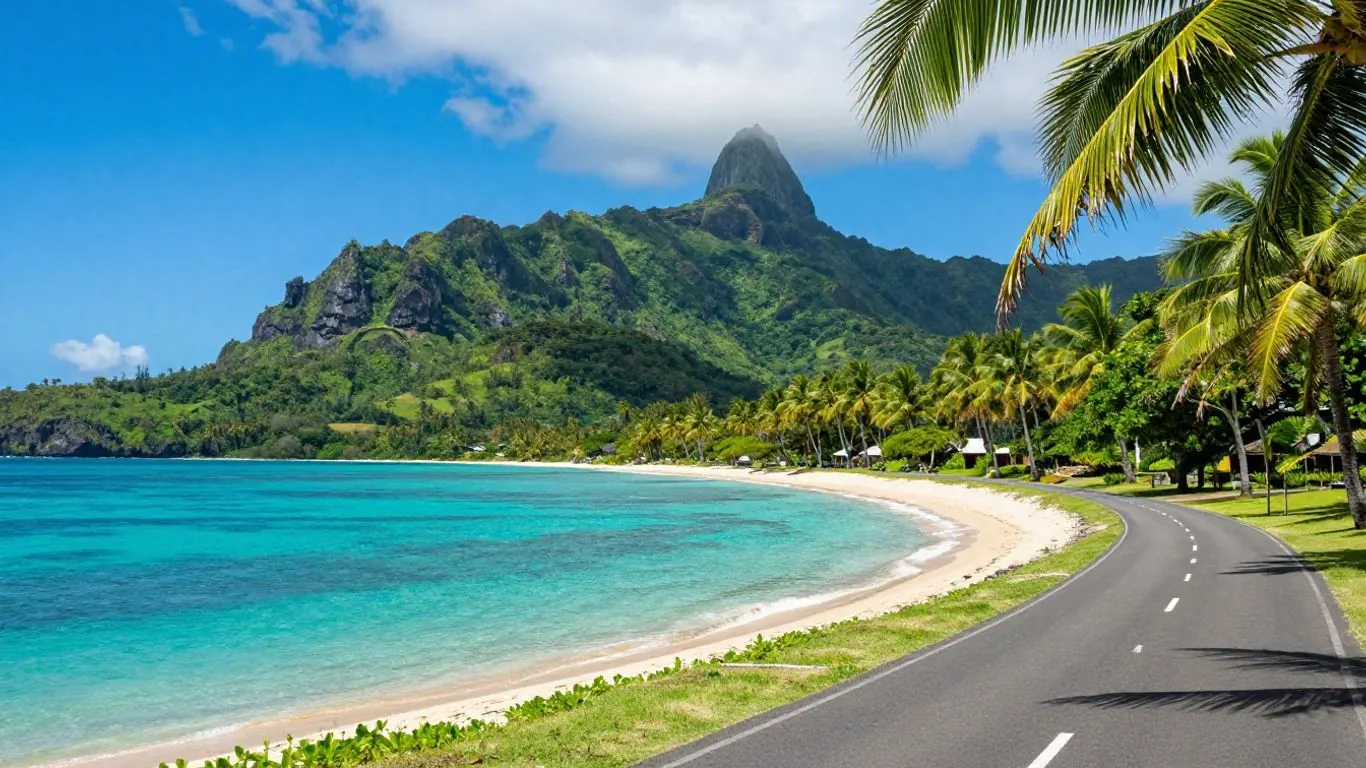
Levuka, on the east coast of Ovalau island, was Fiji's first colonial capital and became Fiji's first UNESCO World Heritage Site. It is a small, working port town of timber shopfronts, a sea wall and steep green hills, and it is best explored on foot over two or three unhurried days.
Getting there from Suva takes either a short flight or a bus-and-ferry trip of around half a day. This guide covers the history in brief, a self-guided heritage walk, trips beyond town, and the practical side of travel to Ovalau.
Why Levuka matters
UNESCO inscribed Levuka Historical Port Town on the World Heritage List in 2013. Its statement of Outstanding Universal Value describes a port developed from the 1820s by American and European traders that became Fiji's first colonial capital. It was here that Tui Cakobau ceded Fiji to Britain in 1874. The capital moved to Suva in 1882, but companies kept building in Levuka, so the town preserves every stage of colonial development in the South Pacific.
UNESCO highlights two things. One is the rare survival of a late colonial port town in the Pacific. The other is the way its plan blends local settlement traditions with colonial standards. The streets fan out from Beach Street, following the contours of the land. Inland are the sites of two former indigenous villages, Totoga and Nasau. Most buildings are one or two storeys, clad in weatherboard or corrugated iron, with hipped or gabled roofs.
For the wider story of how Levuka fits into Fiji's past, from Lapita settlers to independence, see our guide to Fiji's history.
A self-guided heritage walk
Most of the key sites sit along or just behind Beach Street, so a loop on foot takes two to three hours at a relaxed pace. UNESCO lists these among the elements that define the site:
- Beach Street and the sea wall. The stone and concrete sea wall runs the length of the waterfront. Start at one end and walk the whole street to read the shopfronts, bond stores and old trading buildings.
- Morris Hedstrom bond store and the Community Centre. The bond store is one of the town's landmark commercial buildings. Nearby, the Levuka Community Centre houses a branch of the Fiji Museum in a renovated historic store. Check opening hours locally.
- Port Authority, Post and Customs buildings. Look for the remnant tram tracks that once ran to the wharf.
- The Royal Hotel. Founded in the late 1860s and still operating, it is among the oldest hotels in the South Pacific.
- Town Hall, Ovalau Club and Levuka Public School. The school opened in 1879 and was Fiji's first public school.
- Former Cakobau Parliament House site. Now the European Memorial.
- Nasova and the Deed of Cession site. At the southern end of town, where the 1874 cession was signed, alongside the site of the former Government House.
- Residential lanes. Captain Robbie's bungalow, the Hennings residence, workers' cottages and the Baba indentured labour settlement show how people lived beyond the waterfront.
Levuka is a living town, not a museum. Many buildings are private homes or working businesses, so view them from the street unless they are clearly open to visitors. Dress modestly away from the waterfront.
Beyond town: Lovoni and the islands
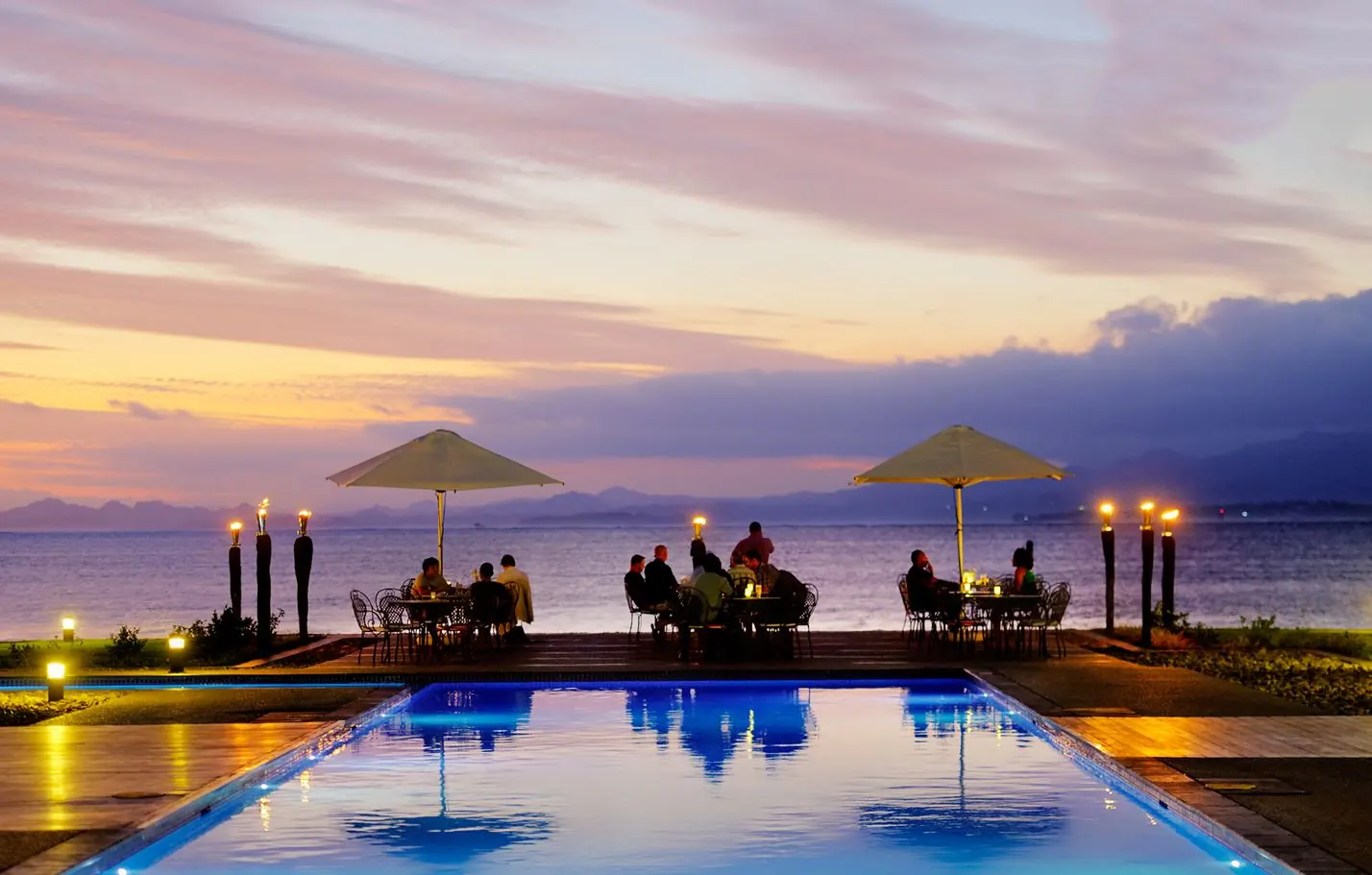
Ovalau is the eroded remnant of an extinct volcano, and its interior is steep, forested and cut by streams. Two outings are worth adding:
- Lovoni village. It sits inside the island's old volcanic crater, in a fertile valley. Visits are best arranged through your accommodation with a local guide, so village protocol (including a sevusevu offering of kava root) is handled properly.
- Leleuvia and nearby islets. Small coral islands off Ovalau's coast are reached by boat for snorkelling and beach time. Ask your host about current boat operators and sea conditions before you go.
Hiking above town gives sweeping views over the harbour and reef. Walk with a local guide, as trails are informal and can be slippery after rain.
Getting to Levuka from Suva
| Option | How it works | Good to know |
|---|---|---|
| Flight | Northern Air lists Levuka among its destinations from Nausori Airport near Suva. The airstrip is on the west side of Ovalau, a road transfer away from town. | Fastest option, but small aircraft have strict baggage limits. Confirm the schedule and the airstrip transfer when you book. |
| Bus and ferry | A connecting coach runs from Suva to Natovi Landing on Viti Levu's east coast, then a ferry crosses to Ovalau. Operators have included Patterson Brothers Shipping and Goundar Shipping. | Allow around half a day door to door. Departure times, landing points and fares change, so confirm directly with the operator and book a few days ahead. |
| Private charter | Boat or air charter can sometimes be arranged. | Weather dependent and priced on request. |
Whichever way you travel, base yourself in Suva the night before so an early start is easy. Avoid scheduling an international flight the day after you return from Ovalau. Sea and weather conditions can delay small boats and aircraft.
Where to stay and how long
Accommodation on Ovalau is small-scale: guesthouses, homestays and simple lodges in and around Levuka, plus the historic Royal Hotel in town. Expect clean, basic rooms rather than resort facilities. Book ahead, as rooms are limited.
- One night: enough for the heritage walk, but rushed given the travel time.
- Two nights: the sweet spot. Spend one day on the town and one on Lovoni or a nearby island.
- Three nights or more: ideal for slow travellers, photographers and anyone interested in history.
Eating is simple too. A handful of cafés and small restaurants in town serve simple local dishes, plus fresh fruit, coconut water and juices. Carry some Fiji dollars in cash, as card acceptance can be limited in small towns.
When to go
Levuka can be visited year-round. The drier months from May to October are the most comfortable for walking and boat trips. The Government of Canada's Fiji travel advice notes that the rainy and cyclone season runs from November to April. In those months, keep a spare day in your plans in case ferries or flights are disrupted. Like the rest of eastern Viti Levu and the Lomaiviti group, Ovalau is greener and wetter than the Nadi side, so pack a light rain jacket whatever the month.
Planning notes
Levuka rewards travellers who want something other than a resort. Pair it with Suva and perhaps Kadavu or Taveuni for a history-and-nature trip, or see our guide to off-the-beaten-path Fiji for other quiet corners. Confirm ferry or flight times a week before you go, and book your Levuka accommodation before your transport. If you would like us to fit Ovalau into a wider Fiji itinerary, Far & Away Adventures can arrange the routing and stays.
Frequently asked questions
Can I visit Levuka as a day trip from Suva?
It is possible on some flight schedules, but the travel time leaves very little time in town. An overnight stay is far more rewarding.
Is Levuka suitable for families?
Yes, for families who enjoy walking and history. Facilities are simple, and there are no resort-style kids' programs, so it suits older children best.
Do I need a guide for the heritage walk?
No. Levuka is compact and easy to explore alone. A local guide adds stories and context, and you can usually arrange one through your accommodation.